



[:en]DOT.ASAHI.COM: "Negative rumors continue to spread" Nevertheless, why make merchandise for the reconstruction of Shuri Castle?[:it]DOT.ASAHI.COM: "Le voci negative continuano a diffondersi" Tuttavia, perché creare una raccolta fondi per la ricostruzione del castello di Shuri?[:]
[:en]It has been a month since Shuri Castle burnt down. The very next day after the incident, Okinawa-born singer, GACKT-san (46) declared “Move” on his own Instagram, and one week later, he announced that he will be selling a certain “Shuri Castle Reconstruction Item”. What feelings and convictions of his led to this?
Here, he will reveal his “love” for Okinawa where he spent his valetudinarian early childhood, the discrimination from mainlanders, and his opinion about his modernising hometown.

* * *
―― The day when GACKT-san proclaimed “I’ll do my best to help speed up its restoration” on SNS was one day after (Shuri Castle was) burnt down. And soon after that, you announced the potential sale of “Shuri Castle Reconstruction Merchandise”. Please share with us your thoughts regarding that once more.
I was overseas when the fire happened. I received a message saying, “It’s burning” at night, but I couldn’t understand what it was about in the beginning. When I saw the video on the news, I was so shocked that I initially thought that it was CG or fake news. When I realised that it was true, I thought, “You’ve got to be kidding me……”. I couldn’t stand to stay in that spot watching.
After that, I began receiving tons of messages saying things like “Let’s move together” and “If there is anything I can do to help, I would like to” from Okinawans, people who have visited Shuri Castle, and those who felt attached to Okinawa and Shuri Castle. Of course, I personally did intend to do something, but I didn’t expect so many people to come to me and say “Please do something”. I normally look at all my Instagram messages, but this time, the amount was simply overwhelming. With that included, the next day, I announced, “I’ll do it.”
After that, I told my office that “I believe that there is something I must do”, and everyone responded with, “If that’s what you say, then there is no other option”.
I made a personal donation as well, but if that’s all I did, then I’m not playing my part. I don’t intend to coerce anyone into doing anything, but I believe that our job (as celebrities) is to do more than just stand out. We should do things that increase the number of people who want to help, even if just a little. That’s why it's more meaningful for me to create a platform for people to participate instead of simply saying, “I made a donation”.

It’s especially so this time around. With Shuri Castle, which I am also greatly attached to, being turned into such a state, I thought about what I could do as an Uchinanchu* too. This is also because I clearly remember the last time I visited Shuri Castle which was during the filming of NHK’s BS historical drama Tempest (broadcast 2011) when I did a scene where I walked along the walls of Shuri Castle. I was also let into the state chamber and places where people would normally be barred from and I felt something deeply emotional from it. I think that it would be good as long as I can give back to Okinawa, even in the smallest of ways, by doing what I should do in my own way.
―― I see. Your private life has been wrapped in a veil, so for the word ‘Uchinanchu’ to be used, it was so unexpected……
No, well, the ones who think that I’m shrouded in mystery are those around me, but I’m actually very open. I don’t hide anything Okinawan about me or my private life.
My parents are Uchinanchu and I lived in Okinawa until I was 7 years old, but after that, I moved inland (to the main island). I came back to Okinawa once when I was 16, but I’ve been away ever since and the next time I returned was when I was 26. That’s why my older sister can speak Uchinaguchi (Okinawan language), but I can only speak in broken phrases.
―― Some times, you add ‘sa’ at the end of your words, but does that ‘sa’ come from Uchinaguchi?
Ahaha (lol). I guess my sister’s speech mannerisms rubbed off on me. Even though I thought I was speaking in standard Japanese (lol).
But even if my Uchinaguchi is broken, I have a strong pride about being Okinawan. Times are changing, but when I was being discriminated against when I was young. There’s no point in digging it up now, but minuses don’t work negatively within me and at that time, I felt, “I’m definitely not gonna lose”. When I’m overseas, I’ve been asked (where I come from), and at those times, I realise that I consider my nationality to be Okinawan and that I mustn’t do anything that will embarrass Okinawans. Perhaps those who live away from Okinawa feel like this more than those who are residing there.
I’ve always been looking at Okinawa from the outside, so while there’s a part of me that does it very calmly, there’s also another part that contrarily loves it more than those residing there. When I go to the region and I get asked, “What do you want to eat?”, I’d often answer with “Let’s go eat Okinawan cuisine.”

When you watch from afar, you’ll get to understand a lot of things. For example, Kinchou, the central part of the main island, used to have this strong flair in the atmosphere and ambience of the city that is unique to Okinawa. But now, it’s far too modernised and it ends up feeling no different than any place inland.
This is my own theory, but there are lots of cities and regions in Japan itself that has been modernised. And with these modernised cities, it’ll look cutting-edge only at the moment when it is completed, but just a mere 5 to 10 years later, it’ll turn into an old or backward city.
Trying to keep the old cityscapes doesn’t make it backdated. If we cherish the good old days, letting such cherished things exist where it is will convey its importance to everyone. That is what will touch a person’s heart and make people want to come and see things like these. And thus, by drawing people in, it becomes a tourist attraction.
―― 7 years ago, you started living in Malaysia and there are good points and trouble points that can only be observed because you’re overseas, right?
That too, yes. When it comes to preserving culture and history, Japan has honestly passed the point of no return. Even Kyoto and Kanazawa are steadily getting modernised, despite the fact that Kyoto is a city where culture should especially be protected.
In Europe, historical buildings and cityscapes are being protected under laws so strict that you’d need a permit to destroy any building. Don’t you think that Japan needs to conserve buildings and landscapes that are unique to those cities too? If we don’t start thinking of it as a national commitment to conserve our culture and turn it into a source of tourism, we’ll steadily lose something very precious to us. I feel this sense of crisis very strongly.
―― This time’s Reconstruction Support Item may be a chance for purchasers to start thinking about that too.
It’s just my own opinion so it’s not something I’m trying to impose on people. I just think that, more than anything, there is significance in the bringing everyone’s feelings together. While it is a real shame that a lot of materials and Shuri Castle, the symbol of Okinawa, have been burnt away, I think that it’ll be nice if people from both outside and within the prefecture can share the thought, “Let’s rebuild Shuri Castle once more with everyone’s help”. What will be rebuilt will indeed be a new remake so there may be people who will say that it’s not the real thing. But if a new start can come out of people’s emotions being put into there, the significance behind it far surpasses that of a simple rebuilding. This is what’s extremely important.
The act of putting just a tiny bit of your feelings into it without treating it as someone else’s problem. That’s the kind of support I want.
――When you made your ‘triumphal return’ at 2017’s Okinawa International Movie Festival, your choice of words in saying, “I want to help Okinawa”, left quite the impression too. You’ll be celebrating your 20th anniversary of solo activities and starting your national tour this coming January, so, was there a moment when you had a change of mind as you built your career?
The moment when I did a little reconsidering within myself was in 2003 when I celebrated my 30th birthday. I have a weak constitution to begin with so I decided that my life would end at age 30. That’s why I decided that I would simply sprint until that point in time, I was impatient to do everything that I had to do, and I was afraid too. I went solo when I was 26 and I struggled and tried to leave some sort of mark. In any case, I was desperate with myself and I couldn’t afford to think about anything else.

However, the moment I crossed the line of 30-years-old, I guess you could say that I was relieved but my fear of death disappeared. Like, I don’t mind dying whenever because I’ve done my best to get here. I came to decide that I’ll spend everyday smiling and without regrets. The time spent from that day on is considered as the rest of my life to me. And that this life I’m living from that point on will be for the sake of leaving something behind for someone else, for fulfilling my duty as an adult. It was from that point on when I became capable of doing a variety of things.
But, honestly, this isn’t because of a certain cause or something. I’m just taking action on my own. The office staff working for me have a hard time (lol).
―― You also volunteered and raised funds at the time of the Great East Japan Earthquake, didn’t you?
During that disaster, in a moment, I thought, “I have to do this”, and I immediately called up Kawasaki Mayo-san who has a sizeable network in the entertainment industry to discuss things with him. Mayo-san called people up for me, gathered close to 100 tons of supplies from all over Japan, and we managed to deliver it all to the affected areas in a week. At the time, it was abnormally cold and highways were blocked off too, so with our priority of delivering the supplies to them as soon as possible, I made use of all my connections. I also arranged for a gasoline vehicle from Kansai to bring gasoline and kerosene over. After getting that done, I volunteered at the affected areas, established a fund for reconstruction, and then conducted street donation collection all around the country.
I was working 24 hours a day during the period from 11 March to 1 April so I barely slept. Because my friends from all over the country were constantly calling me, I was getting messages from overseas that said they wanted to help, I was actually letting in people from the affected areas to my home, and my friends kept coming and going too.
But it was tougher after that. I was already prepared that I’d definitely get attacked by people who do business by writing gossip and such stories, but it was much worse than I thought. They were criticising how people spent their efforts, and to top it off, they even went as far as to say that I was stealing from the donations…… It was terrible. But I skipped past sadness and laughed. I also thought that they’re getting their priorities wrong by saying things like that.

My band members also asked me, “Isn’t it painful?”, but the act of offering someone kindness is accompanied by the resolution and responsibility to deal with whatever happens after that. Say, for example, when you’re driving, you to give way to someone who can’t change lanes. If nothing happens, it’ll become a kind act, but if that person brakes suddenly and you rear-end them. When that person gets out of their car and says to you, “Where the heck are you looking at when you drive?”, what do you do? If you think, “I shouldn’t have given way to them”, then you’re not resolute enough to begin with.
Of course, you weren’t looking for some sort of reward, but there is also the possibility that you will be reciprocated with hostility or get attacked from some unreasonable perspective. If you don’t have the resolution to accept that, then you shouldn’t do it in the first place.
―― So you’re offering this “Shuri Castle Merchandise” with the same resolution?
I will do what I should do. I’m not a leading authority in reconstruction, so if I can help the people who are rebuilding Shuri Castle just a little, then I’ll take up that part.
Even now, there are still stories of me embezzling donations begin twistedly written online and getting into the news overseas until I’m sick of it. I’m getting bashed for what I did and negative rumours are constantly running around. Oh well, there’s nothing I can do about that either (lol).
―― Lastly, if there’s a vision that you hope for with regards to the future of Okinawa, please share it with us.
This is more towards the people living in Okinawa rather than Okinawa itself, but I hope that they won’t forget the pride of Uchinanchu. I hope that they will take this chance to think about what it is that they must protect as Okinawans.
Maybe I shouldn’t really say that it includes historical issues, but we have, in a way, come this far while accepting various historical walls. That’s why, in this peaceful era, the number one thing is that we can’t lose focus on peace. We have to look back on the past and hold on to that sense of crisis as we think about what we have to do as Okinawans. That’s how I feel.
(Interviewer: Kinjou Tamayo, AERA dot. Editing Department)
Notes:
* Uchinanchu is the term used by Okinawan immigrants to identify themselves as an ethnic group distinct from the Yamatunchu or Naichi of Japan’s four main islands.
https://www.amazon.com/Uchinanchu-History-Okinawans-Center-Oral/dp/0824807499" rel="noopener" target="_blank">Source
Source: dot.asahi.com
Translation: GACKT ITALIA Team
Translation © GACKT ITALIA Team
[:it]È passato un mese da quando il castello di Shuri è stato incendiato. Il giorno dopo l'incidente, il cantante di Okinawa, GACKT-san (46), dichiarò "Muovetevi" sul suo Instagram e una settimana dopo annunciò che avrebbe venduto un certo "Articolo per la ricostruzione del castello di Shuri". Quali sentimenti e convinzioni hanno portato a questo?
Qui, rivelerà il suo "amore" per Okinawa, dove ha trascorso la sua prima infanzia, la discriminazione dai continenti e la sua opinione sulla sua città natale.
* * *
――Il giorno in cui GACKT-san ha proclamato "Farò del mio meglio per accelerare il suo restauro" sui SNS è stato un giorno dopo l'incendio del castello di Shuri. E subito dopo, hai annunciato la potenziale vendita di "Merce per la ricostruzione del castello di Shuri". Per favore, condividi con noi i tuoi pensieri a riguardo.
Ero all'estero quando è successo l'incendio. Ho ricevuto un messaggio che diceva "Sta bruciando" di notte, ma all'inizio non riuscivo a capire di cosa si trattasse. Quando ho visto il video sulla notizia, ero così scioccato che inizialmente ho pensato che fossero notizie false. Quando ho capito che era vero, ho pensato: "Mi stai prendendo in giro ...". Non sopportavo di stare in quel posto a guardare.
Dopo di ciò, ho iniziato a ricevere tonnellate di messaggi che dicevano cose come "Muoviamoci insieme" e "Se c'è qualcosa che posso fare per aiutare, mi piacerebbe" da Okinawa, le persone che hanno visitato il Castello di Shuri e coloro che si sono sentiti attaccati Okinawa e Shuri Castle. Certo, personalmente avevo intenzione di fare qualcosa, ma non mi aspettavo che così tante persone venissero da me e dicessero "Per favore, fai qualcosa". Normalmente guardo tutti i miei messaggi di Instagram, ma questa volta il numero è stato semplicemente travolgente. Con quello incluso, il giorno dopo, ho annunciato: "Lo farò".
Successivamente, ho detto al mio ufficio "credo che ci sia qualcosa che devo fare", e tutti hanno risposto, "Se è quello che dici, allora non c'è altra opzione".
Ho anche fatto una donazione personale, ma fatto solo quello, non farò la mia parte. Non intendo costringere nessuno a fare qualcosa, ma credo che il nostro lavoro (come celebrità) sia quello di fare di più che distinguerci. Dobbiamo fare cose che aumentino il numero di persone che vogliono aiutare, anche se solo un po'. Ecco perché è più significativo per me creare una piattaforma per la partecipazione delle persone invece di dire semplicemente "Ho fatto una donazione".
È particolarmente vero questa volta. Con il castello di Shuri, a cui anch'io sono molto affezionato, essendo stato trasformato in tale stato, ho pensato anche a cosa avrei potuto fare come un Uchinanchu*. Questo anche perché ricordo chiaramente l'ultima volta che ho visitato il Castello di Shuri durante le riprese del dramma storico Tempest (trasmissione 2011) della NHK, quando ho fatto una scena in cui ho camminato lungo le mura del Castello di Shuri. Mi hanno anche fatto entrare nella camera di stato e nei luoghi in cui le persone sarebbero state normalmente escluse e ho sentito qualcosa di profondamente emotivo da ciò. Penso che sarebbe bello riuscire a restituirlo a Okinawa, anche nel più piccolo dei modi, facendo quello che dovrei fare a modo mio.
―― Vedo. La tua vita privata è stata avvolta in un velo, quindi l'uso della parola "Uchinanchu" è stato così inaspettato ...
No, beh, quelli che pensano che io sia avvolto nel mistero sono quelli intorno a me, ma in realtà sono molto aperto. Non nascondo nulla di Okinawa su di me o sulla mia vita privata.
I miei genitori sono Uchinanchu e ho vissuto a Okinawa fino a quando avevo 7 anni, ma successivamente mi sono trasferito nell'entroterra (sull'isola principale). Sono tornato ad Okinawa una volta quando avevo 16 anni, ma da allora sono stato via e la volta successiva sono tornato quando avevo 26 anni. Ecco perché mia sorella maggiore può parlare Uchinaguchi (lingua di Okinawa), ma posso parlare solo in frasi spezzate.
―― Alcune volte, aggiungi "sa" alla fine delle tue parole, ma "sa" viene da Uchinaguchi?
Ahaha (lol). Immagino che i manierismi vocali di mia sorella si siano cancellati. Anche se pensavo di parlare in giapponese standard (lol).
Ma anche se il mio Uchinaguchi non c'è più, sono molto orgoglioso di essere di Okinawa. I tempi stanno cambiando, ma quando ero discriminato da giovane. Non ha senso dirlo adesso, ma gli svantaggi non funzionano negativamente dentro di me e in quel momento, ho sentito, "sicuramente non perderò". Quando sono all'estero, mi è stato chiesto (da dove vengo), e in quei momenti, mi rendo conto che considero la mia nazionalità come Okinawa e che non devo fare nulla che possa mettere in imbarazzo Okinawa. Forse quelli che vivono lontano da Okinawa si sentono così più di quelli che risiedono lì.
Ho sempre guardato Okinawa dall'esterno, quindi mentre c'è una parte di me che lo fa con molta calma, c'è anche un'altra parte che lo ama al contrario di quelli che risiedono lì. Quando vado nella regione e mi viene chiesto, "Cosa vuoi mangiare?", Spesso rispondevo con "Andiamo a mangiare la cucina di Okinawa".
Quando guardi da lontano, capirai molte cose. Ad esempio, Kinchou, la parte centrale dell'isola principale, aveva un forte fascino nell'atmosfera della città unica di Okinawa. Ma ora è troppo modernizzata e finisce per non sentirsi diversa da qualsiasi altro posto nell'entroterra.
Questa è la mia teoria, ma ci sono molte città e regioni in Giappone che si sono modernizzate. E con queste città modernizzate, sembrerà all'avanguardia solo nel momento in cui sarà completata, ma solo 5-10 anni dopo, si trasformerà in una città vecchia o arretrata.
Cercare di mantenere i vecchi paesaggi urbani non rende obsoleti. Se amiamo i bei vecchi tempi, lasciare che tali cose così care esistano ovunque si trasmetterà la sua importanza a tutti. Questo è ciò che toccherà il cuore di una persona e farà desiderare alle persone di venire a vedere cose come queste. E così, attirando le persone, diventa un'attrazione turistica.
―― 7 anni fa, hai iniziato a vivere in Malesia e ci sono buoni punti e punti problematici che possono essere osservati solo perché sei all'estero, giusto?
Anche quello sì. Quando si tratta di preservare la cultura e la storia, il Giappone ha onestamente superato il punto di non ritorno. Persino Kyoto e Kanazawa si stanno costantemente modernizzando, nonostante Kyoto sia una città in cui la cultura dovrebbe essere particolarmente protetta.
In Europa, gli edifici storici e i paesaggi urbani sono protetti da leggi così rigide da richiedere un permesso per distruggere qualsiasi edificio. Non pensi che il Giappone debba conservare edifici e paesaggi che sono unici anche per quelle città? Se non iniziamo a pensarlo come un impegno nazionale per conservare la nostra cultura e trasformarla in una fonte di turismo, perderemo costantemente qualcosa di molto prezioso per noi. Sento fortemente questo senso di crisi.
―― L'articolo di supporto per la ricostruzione di questa volta potrebbe essere un'opportunità per gli acquirenti di iniziare a pensarci.
È solo una mia opinione, quindi non è qualcosa che sto cercando di imporre alle persone. Penso solo che, più di ogni altra cosa, vi sia un significato nel riunire i sentimenti di tutti. Anche se è un vero peccato che molti materiali e il castello di Shuri, il simbolo di Okinawa, siano stati bruciati, penso che sarebbe bello se le persone sia fuori che dentro la prefettura possano condividere il pensiero: "Ricostruiamo Shuri Castle ancora una volta con l'aiuto di tutti”. Ciò che sarà ricostruito sarà davvero un nuovo remake, quindi potrebbero esserci persone che diranno che non è la cosa reale. Ma se un nuovo inizio può nascere dalle emozioni delle persone che vengono messe lì, il significato dietro di esso supera di gran lunga quello di una semplice ricostruzione. Questo è estremamente importante.
L'atto di mettere solo un po' dei tuoi sentimenti in esso senza trattarlo come il problema di qualcun altro. Questo è il tipo di supporto che voglio.
―― Quando hai fatto il tuo "ritorno trionfale" all'Okinawa International Movie Festival del 2017, la tua scelta di parole nel dire "Voglio aiutare Okinawa" ha lasciato un'impressione. Celebrerai il tuo ventesimo anniversario di attività da solista e inizierai il tuo tour nazionale a gennaio, quindi c'è stato un momento in cui hai cambiato idea mentre costruivi la tua carriera?
Il momento in cui ho fatto un piccolo ripensamento dentro di me è stato nel 2003, quando ho celebrato il mio trentesimo compleanno. Ho una costituzione debole per cominciare, quindi ho deciso che la mia vita sarebbe finita a 30 anni. Ecco perché ho deciso che avrei semplicemente scattato fino a quel momento, ero impaziente di fare tutto ciò che dovevo fare, ed avevo anche paura. Sono andato da solo a 26 anni e ho cercato di lasciare una sorta di segno. In ogni caso, ero disperato con me stesso e non potevo permettermi di pensare a nient'altro.
Tuttavia, nel momento in cui ho superato il limite di 30 anni, immagino che potresti dire che ero sollevato ma la mia paura della morte è scomparsa. Ad esempio, non mi dispiace morire ogni volta perché ho fatto del mio meglio per arrivare qui. Sono arrivato a decidere che passerò ogni giorno sorridendo e senza rimpianti. Il tempo trascorso da quel giorno in poi è considerato per me il resto della mia vita. E che questa vita che sto vivendo da quel momento in poi sarà per il bene di lasciare qualcosa per qualcun altro, per adempiere al mio dovere di adulto. Da quel momento in poi sono diventato in grado di fare una varietà di cose.
Ma, onestamente, ciò non è dovuto a una determinata causa o qualcosa del genere. Sto solo prendendo provvedimenti da solo. Il personale dell'ufficio che lavora per me fa fatica (lol).
―― Hai anche offerto volontariato e raccolto fondi al momento del terremoto del Grande Giappone orientale, vero?
Durante quel disastro, in un momento, ho pensato: "Devo farlo", e ho immediatamente chiamato Kawasaki Mayo-san, che ha una rete considerevole nel settore dell'intrattenimento per discutere di cose con lui. Mayo-san ha chiamato le persone per me, ha raccolto circa 100 tonnellate di rifornimenti da tutto il Giappone e siamo riusciti a consegnare tutto alle aree colpite in una settimana. All'epoca faceva un freddo anomalo e anche le autostrade erano bloccate, quindi con la nostra priorità di consegnare le forniture il prima possibile, ho sfruttato tutte le mie connessioni. Ho anche organizzato un veicolo a benzina di Kansai per portare benzina e cherosene. Dopo averlo fatto, mi sono offerto volontario nelle aree colpite, ho istituito un fondo per la ricostruzione e poi ho condotto una raccolta di donazioni stradali in tutto il paese.
Lavoravo 24 ore al giorno durante il periodo dall'11 marzo al 1 aprile, quindi dormivo a malapena. Poiché i miei amici provenienti da tutto il paese mi chiamavano costantemente, ricevevo messaggi da oltreoceano che dicevano che volevano aiutare, in realtà stavo facendo entrare persone dalle aree colpite a casa mia, e anche i miei amici continuavano ad andare e venire.
Ma è stato più difficile dopo. Ero già pronto a essere sicuramente attaccato da persone che fanno affari scrivendo pettegolezzi e storie simili, ma è stato molto peggio di quanto pensassi. Stavano criticando il modo in cui le persone hanno speso i loro sforzi e, per finire, sono persino arrivate a dire che stavo rubando dalle donazioni... È stato terribile. Ma ho lasciato perdere la tristezza e ho riso. Ho anche pensato che stessero sbagliando le loro priorità dicendo cose del genere.
I membri della mia band mi hanno anche chiesto: "Non è doloroso?", Ma l'atto di offrire a qualcuno gentilezza è accompagnato dalla risoluzione e dalla responsabilità di affrontare qualsiasi cosa succeda dopo. Ad esempio, quando guidi, devi dare la precedenza a qualcuno che non può cambiare corsia. Se non succede nulla, diventerà un atto gentile, ma se quella persona frena all'improvviso tu freni. Quando quella persona esce dalla macchina e ti dice "Dove diavolo stai guardando quando guidi?", Cosa fai? Se pensi: "Non avrei dovuto lasciare il posto a loro", allora non sei abbastanza risoluto per cominciare.
Certo, non stavi cercando una sorta di ricompensa, ma c'è anche la possibilità che sarai ricambiato con l'ostilità o essere attaccato da una prospettiva irragionevole. Se non hai la risoluzione per accettarlo, non dovresti farlo in primo luogo.
―― Quindi stai offrendo questo "Merce del Castello di Shuri" con la stessa risoluzione?
Farò quello che dovrei fare. Non sono un'autorità leader nella ricostruzione, quindi se posso aiutare le persone che stanno ricostruendo il Castello di Shuri solo un po ', allora riprenderò quella parte.
Anche ora, ci sono ancora storie su di me che le donazioni per appropriazione indebita iniziano con scritte online e arrivano nelle notizie oltreoceano fino a quando non mi sono stancato. Mi stanno facendo vergogna per quello che ho fatto e le voci negative sono costantemente in giro. Oh bene, non c'è niente che io possa fare al riguardo (lol).
―― Infine, se c'è una visione che speri riguardo al futuro di Okinawa, ti preghiamo di condividerla con noi.
Questo è più rivolto alle persone che vivono a Okinawa piuttosto che a Okinawa stessa, ma spero che non dimentichino l'orgoglio di Uchinanchu. Spero che coglieranno l'occasione per pensare a cosa devono proteggere come Okinawa.
Forse non dovrei davvero dire che include questioni storiche, ma in un certo senso siamo arrivati così lontano accettando varie mura storiche. Ecco perché, in questa era pacifica, la cosa numero uno è che non possiamo perdere la concentrazione sulla pace. Dobbiamo guardare indietro al passato e mantenere quel senso di crisi mentre pensiamo a cosa dobbiamo fare come Okinawani. Ecco come mi sento.
(Intervistatore: Kinjou Tamayo, punto AERA. Dipartimento di redazione)
Note bene:
* Uchinanchu è il termine usato dagli immigrati di Okinawa per identificarsi come un gruppo etnico distinto dallo Yamatunchu o Naichi delle quattro isole principali del Giappone.
https://www.amazon.com/Uchinanchu-History-Okinawans-Center-Oral/dp/0824807499" rel="noopener" target="_blank">Fonte
Fonte: dot.asahi.com
Traduzione: GACKT ITALIA Team
Traduzione © GACKT ITALIA Team
[:]


[:en]R25.JP: "Don't you think it's a good idea to widen your options?" "Way to achieve happiness" as taught by GACKT[:it]R25.JP: "Non pensi che sia una buona idea ampliare le tue opzioni?" "Il metodo per raggiungere la felicità" come insegnato da GACKT[:]
[:en]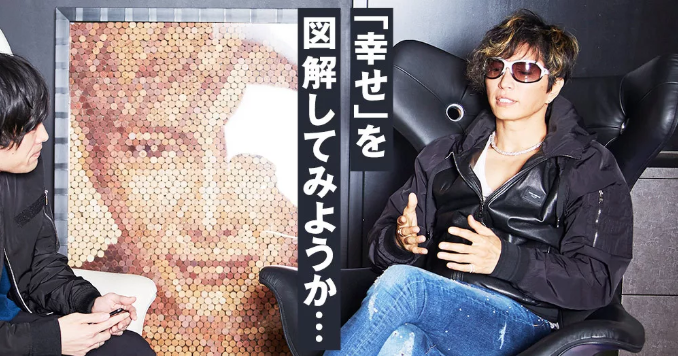
"Happiness is something that needs to be considered in terms of ‘area’."
I never would have thought that the day when I got to interview GACKT-san would come. I must have accumulated some great virtues in my past life for this. Past life, you have my thanks.
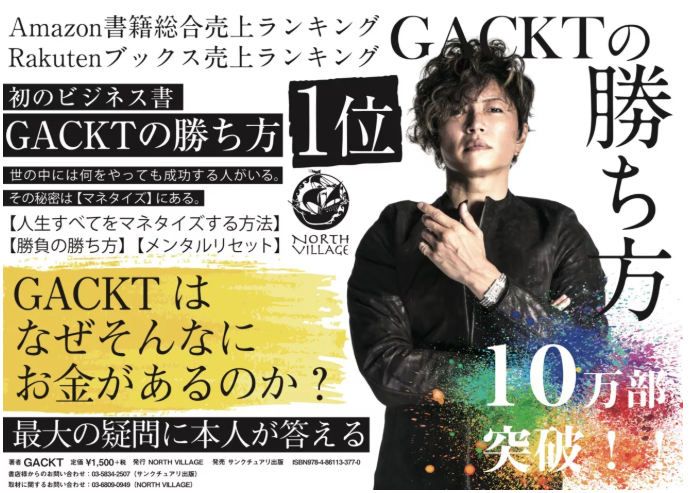
“GACKTの勝ち方 (GACKT’s Way to Win / GACKT no Kachikata)”, the book that was released this August and, within 2 months, sold over 100,000 copies. It was an exceptionally rich volume which covered GACKT-san’s “Growth Philosophy” and “Way to Make Money”, but at the end were these profound words…
“There are many who have ‘achieved success (成功 / seikou)’, but there are few who have ‘achieved happiness (成幸 / seikou)’. There’s a big difference here.”
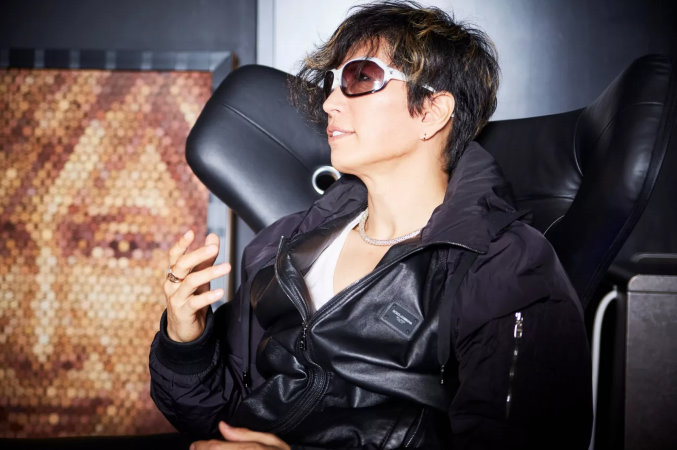
Male singer, songwriter, and actor born in Okinawa Prefecture in 1973. Presently residing in Kuala Lumpur, Malaysia. The first Japanese winner of the “Best Asian Rock Artist”, he is also active as a businessman in real estate businesses catering to the wealthy, restaurant businesses, and others.
GACKT-san, who has been so successful, is saying, “Happiness and success are two different things”. Well, so just what is “happiness” to GACKT-san…? I am all too curious to find out the answer to that.
With that said, this time, we’re intruding into GACKT-san’s private studio (what’s a private studio?) to speak to him directly about “money and success”...!
〈Interviewer: Sano Tomoki〉
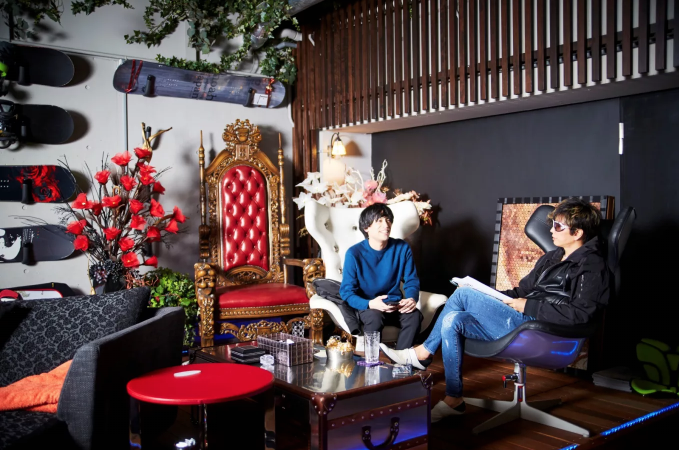
Where on earth is this… Is this paradise…?
GACKT-san says, “The path is not split between ‘success’ and ‘failure’.”
Sano (S): Ga…GACKT-san, thank you for having me here today! (Standing at attention)
GACKT-san (G): Thanks for coming. Don’t just stand there. Well, sit down.
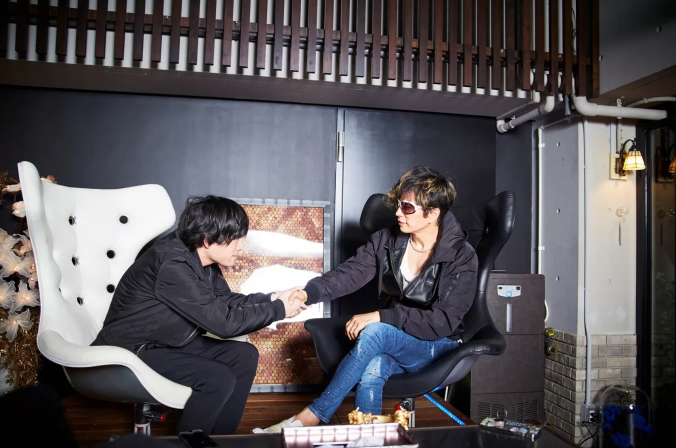
H-his handshake is… His frankness and grip strength can only be described as ‘unexpected’
S: Today, I wanted to talk to you about “money and success”.
I’ve read in GACKT-san’s book that you’re successful in numerous business which includes industries like real estate and food and beverage (F&B). With words like, “To sustain my lifestyle, I need 200 million yen a year”…
Why are so capable of succeeding in just about anything?
G: Hmm… With regards to that question, those are the words of someone who thinks, “When I take on something, there are two paths; either ‘success’ or ‘failure’.”
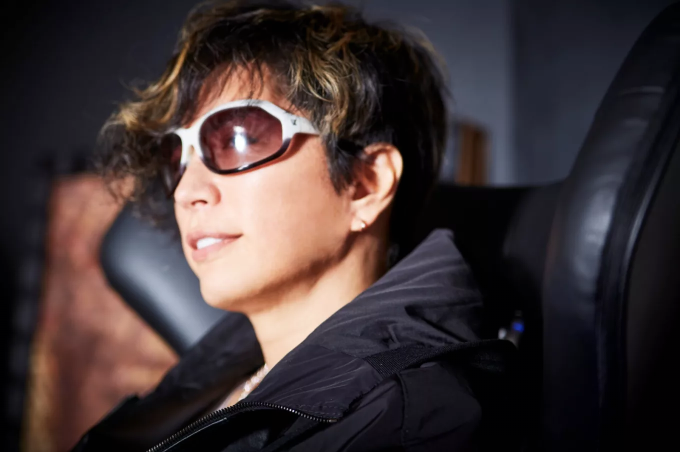
What. Is there something other than that…?
G: In the first place, I personally don’t think that it’s split into two paths of ‘success’ and ‘failure’.
‘Failure’, ‘Failure’, ‘Failure’, ‘Failure’ … ‘Success’.
Things do not branch into either ‘success’ or ‘failure’. The path simply continues on until you succeed. That’s how I think.
S: In other words, does that mean that even GACKT-san has failed in business too?
G: About that. There are so many (occasions) that words cannot describe it (lol).
During those times, I’d bow numerous times to the successful people and listen to what they have to say.
S: Ga-GACKT-san would bow to people and ask them for advice!?
G: I did that a lot. I’d somehow get myself introduced to people who have done well in business and talk to them endlessly about “how to make sure things go well”…
The ones who seize opportunities are not the ‘amazing fellows’ but the ‘lovable fellows’
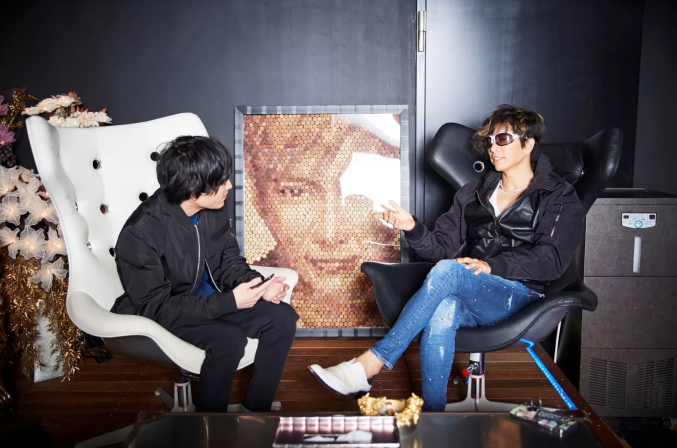
G: When I was young, I never had the thought that “That person is busy, so I’ll refrain from contacting them myself”.
It is a big mistake to think like this.
S: Whaaー…? But if I’m actually considered as annoying I’d feel regretful too…
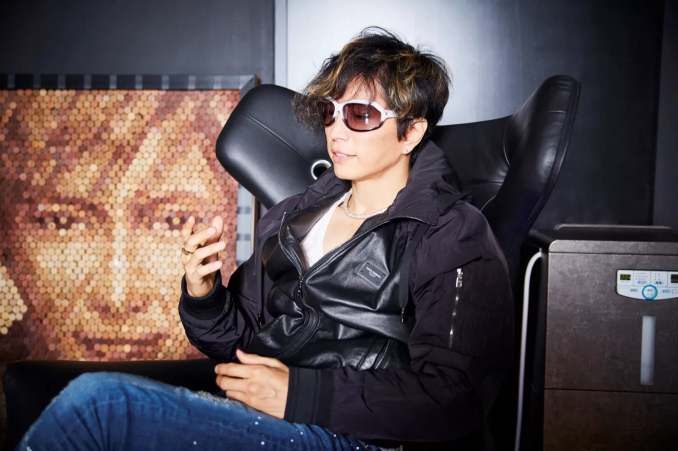
G: The strange thing about this is while someone is contacting me and asking me, “Are you free this week? Are you free next month?”, there will be a point when “This person’s obstinate” turns into “This person’s lovable”.
There are a lot of young kids around me, but when it comes to the kids who keep conveying their enthusiasm to me regardless of how many times they get rejected, I’d end up going, “I got it, I got it. What about this particular day then?”.
S: So, it’s not anything like someone saying, “I want to talk about this with you, so please meet me”, and then deciding to try meeting them because you’re intrigued by the content of that conversation?
G: No, no, it’s not that complex a reason (lol).
Because I’d only get the feeling of ‘This person’s interesting’ or ‘Maybe there’s something I can leave up to them’, and so on after I actually meet the person. In the first place, as a busy person, I don’t expect anything from kids.
S: (Ouch)…
I got the feeling that, “(you) won’t meet this other party unless there is something to gain from meeting them or unless they have already achieved results in life”.
G: Nope. These people get more turns at the bat because they’re ‘lovable fellows’, and thereafter, they turn into ‘amazing fellows’.
The ones who seize opportunities are not the ‘amazing fellows’ but the ‘lovable fellows’
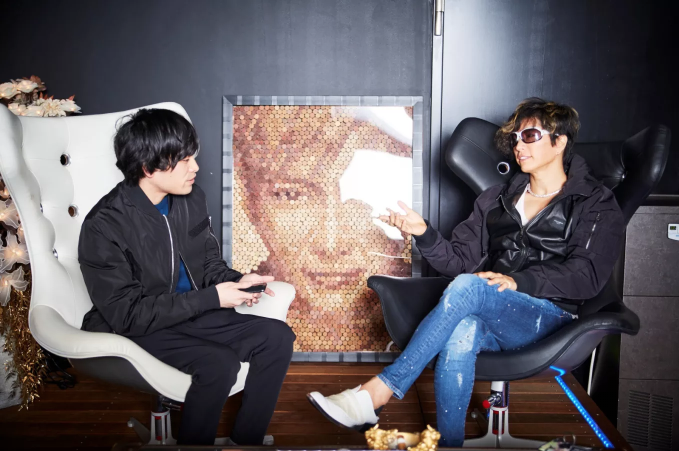
To think that GACKT-san ended up talking about the importance of ‘being lovable’…
G: The bemoaning that “there aren’t any generous seniors who are willing to help” is nonsense. Your actions are what creates the “generous seniors who are willing to help”.
How much effort have you put into obtaining this “lovability”? Isn’t this fundamental to making things happen?
Pointlessly increasing your options leads to the wasting of time
S: It is honestly unexpected to hear that you’ve asked for advice. Because it seemed like you were someone who broke through and surpassed everything with your own ability.
G: Nope, and that’s because life has an expiration date.
It’s far quicker to learn from someone who has made it than just thinking about things on your own.
Those who have a sense of urgency about their own expiration dates will never be able to pick the option of doggedly forging out on their own.
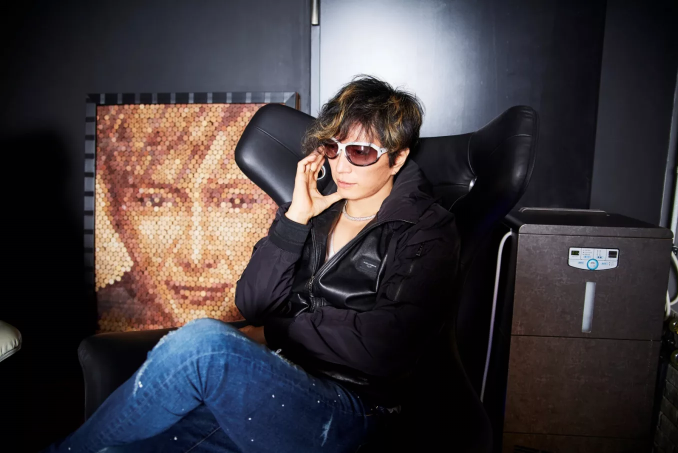
G: But, you know, this sense of impending crisis towards “time” varies from person to person.
Even if you say, “I don’t have time!”, you won’t be able to convey it to people who don’t get it at all, and from what I can see, everyone’s making use of time in extremely wasteful ways. Most people are spending too much time with detours…
Shall I try drawing it out in a diagram?
S: Huh!?
G: Say, for example, if you enter a “good middle school”, your options of “good high schools” thus increases. And similarly, choices for a “good college” by going into a “good high school”, and by going into a “good college”, you’ll have even more choices of “good companies”.
The common school of thought in Japan is, “Please get into a good school for that to happen”.
In other words, everyone thinks that “having lots of choices” is a good thing.
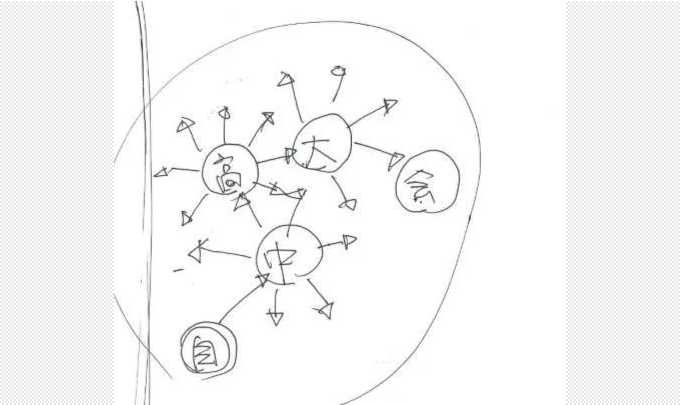
Here, we have GACKT-san’s hand drawn diagram. At the bottom is “self (自)”, referring to oneself. From there, it is connected to numerous options in the form of middle school, high school, college, and companies.
S: That’s… right.
Uh, is it wrong?
G: Looking at this at a glance will seem correct but… In reality, you’ll only have more and more options to worry about the more you postpone making your decision.

Ah, now I understand… This is another stab in the heart…
S: Though it’s true, this state of “I tried increasing my options, but in the end, I’ll try everything out because I can’t decide which is ‘the one’”, people probably face that a lot at their milestones in life… Like when job searching and so on.
G: Everyone’s only looking forward to the ‘next thing’ while thinking “If I do my best now, maybe it’ll lead to something”.
As a result, the only thing that will steadily inflate is the amount of time you spend worrying about your countless choices while taking detours that are unrelated to your own ‘happiness’.
S: The abundance of choices backfires…
So, just how did GACKT-san decide on what path to take?
G: For me, I start planning from my goal.
From there, I draw a “straight line of reverse assessment” down towards my present position.
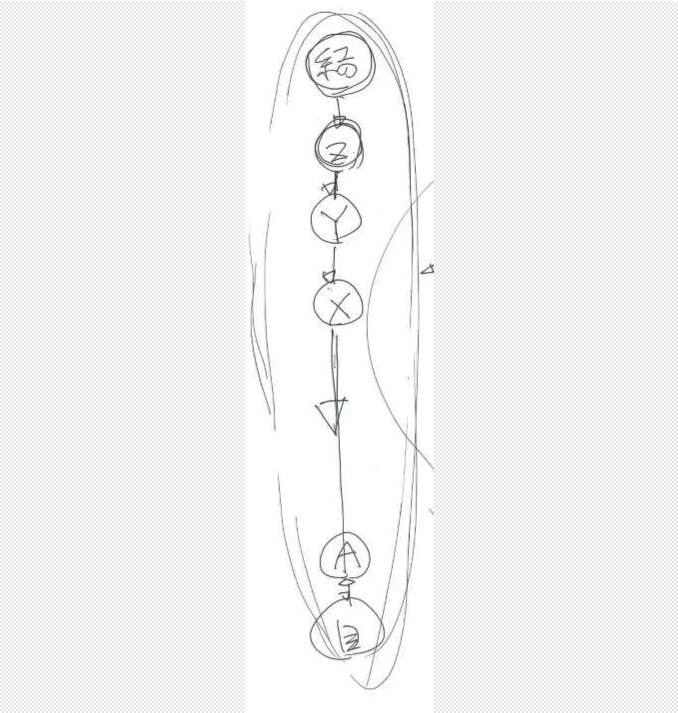
“Result → Z → Y → X → → → A → Self” are connected by one straight line.
G: To reach by goal, the result of “Z” is needed. To get “Z”, I need “Y”. To get “Y”, I need “X”. And so on… Working backwards like this, you’ll know what you need to do right now, which is “A”.
All that you need to do now is to execute it.
People who have a set goal don’t worry about choices because they will only follow one straight line. This completely changes the amount of time that they can use in their lifetime as compared to those who only continue to increase their options.
S: I see…
But I think that “deciding on a goal” itself is really difficult. Like, I don’t have confidence in this goal that I’ve drawn up so, in any case, I’ll just increase my options, and things like that…
G: It doesn’t particularly matter if you change your goal while you’re on the move. Whatever it is, the most important thing is to “decide and draw up a goal that belongs to the present you”.
If you do that, your “value of time” will drastically change as compared to simply doing whatever is presented in front of you now.
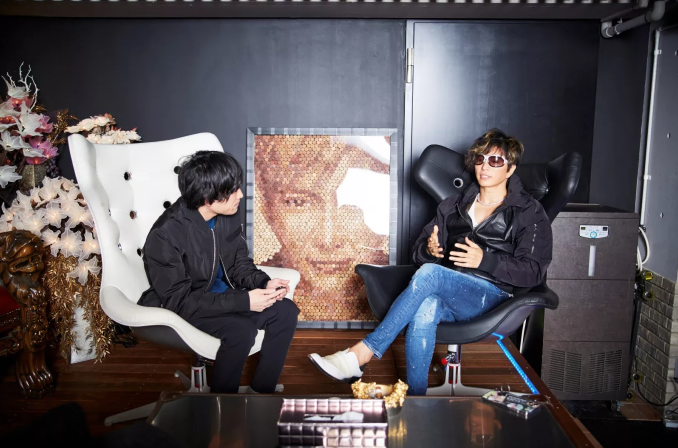
G: There are those who say “culture is life”, but life is very simply “math”.
For people who want to treasure “time”, it’s better if they start deciding on an aim of their own now and drawing things up to derive a formula towards achieving that.
S: Though, it’s true that until it’s typically human to worry indefinitely about things until you’ve resolved yourself to something…
What you consider to be your happiness needs to be considered in terms of ‘area’
S: One more thing I wanted to ask you about is with regards to the words “success is not equal to happiness” that you’ve written.
This is coming from GACKT-san who says, “To sustain my lifestyle, I need 200 million yen a year”, h-honestly, it doesn’t add up…
So, what is happiness…?
G: Everyone expects that “Once I succeed at something, I’ll become happy”, but that isn’t true.
I, too, meet a lot of people who can be said to be happy, but… If you were to ask them whether they are ‘happy’, then, not at all.
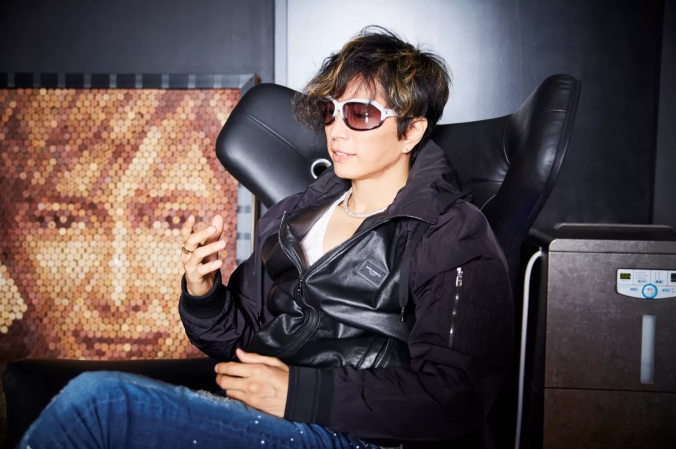
G: In the first place, regarding your question, “What is happiness?”, there’s no one answer to that.
Happiness is something that needs to be considered in terms of ‘area’.
S: Area?
G: Say, for example, ‘happiness’ to me consists of ‘money’, ‘friends’, and ‘time’. It is decided by the area of the ‘triangle’ that these three elements form.
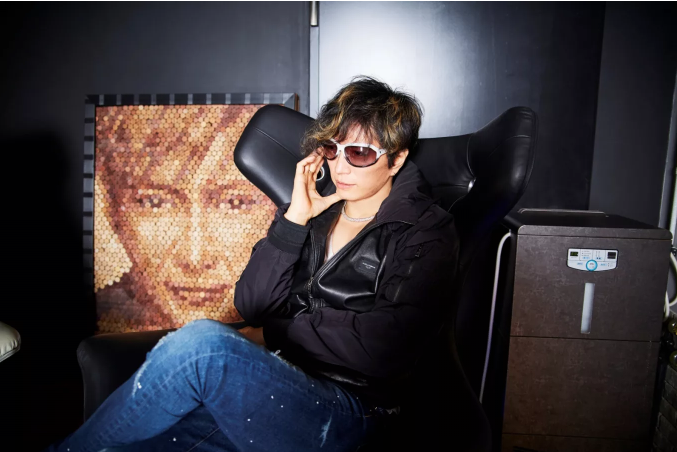
G: 1.To have ‘money’ that allows me to do whatever I want to do.
2. To have ‘friends’ who will fight alongside me to get that ‘money’.
3. To have ‘time’ that I can share with ‘friends.
When these three form a perfect equilateral triangle, that, to me, is the state of ‘happiness’.
Also, there’s the question of how big can I get this area to be… That’s all.
S: GACKT-san’s way to achieving happiness is super easy to understand…
G: A lot of people don’t know what is their own ‘shape of happiness’. That’s why they feel uneasy when they see other people looking happy.
You have to be aware of what the shape of your own ‘happiness’ looks like and what elements it is made up of.
S: That’s true… By the way, is there any particular reason why it has to be a triangle with ‘equal sides’?
G: Personally, I believe that “the law of achieving happiness (成幸の法則)” is to expand your shape of happiness as large as possible while maintaining balance as a ‘regular polygon’.
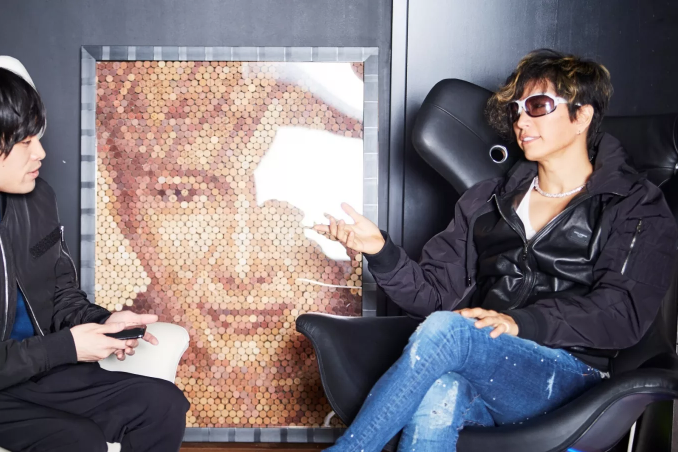
G: For example, when you’re a student, you have ‘friends’ and ‘time’, right? But because you’re severely lacking in ‘money’, this turns into a very small and distorted triangle.
At that point, you’ll desperately work towards getting ‘money’, but suddenly, you’ll realise that you lost sight of everything except earning ‘money’ and have ended up sacrificing ‘friends’ and ‘time’. There are a lot of people who are like this.
They chase after only one thing and end up neglecting everything else. That’s not right. You have to think of a way to achieve balance between everything.
S: That really, really hits home…
Even though we think that we’re chasing after happiness, we’re only steadily heading towards unhappiness. This is definitely how the cogs run…
G: Whether the shape of your happiness is a pentagon or a hexagon… I believe that everyone has their own shape, and that is up to them to freely decide for themselves.
However, maintain that ‘regular polygon’ as much as possible and grow that ‘area’ while keeping that balance. This is something that I hope everyone will keep in mind.
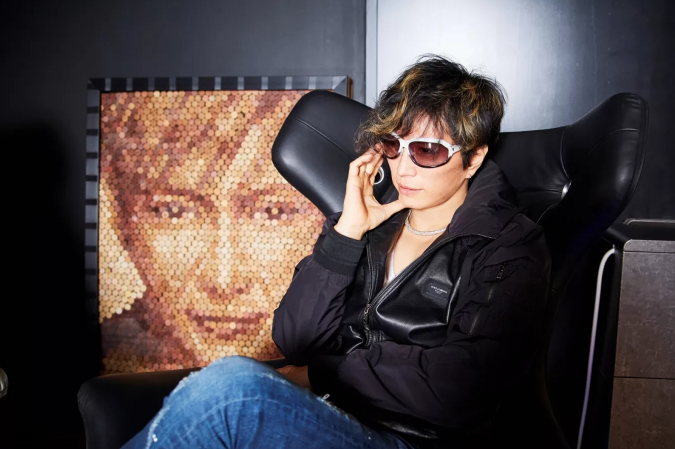
G: In this world, there are many who yell out “the law of achieving success”, but don’t you think that we have to think about being happy more than being successful… This is how I’ve always felt.
I don’t think that those who say that “happiness has nothing to do with money” are ‘serious’ about life
S: If I were to draw my own shape, I think I’d definitely put ‘money’ in there, but…
I have this feeling that it’s difficult to talk about money in Japan.
G: Yeah, that’s a fact.
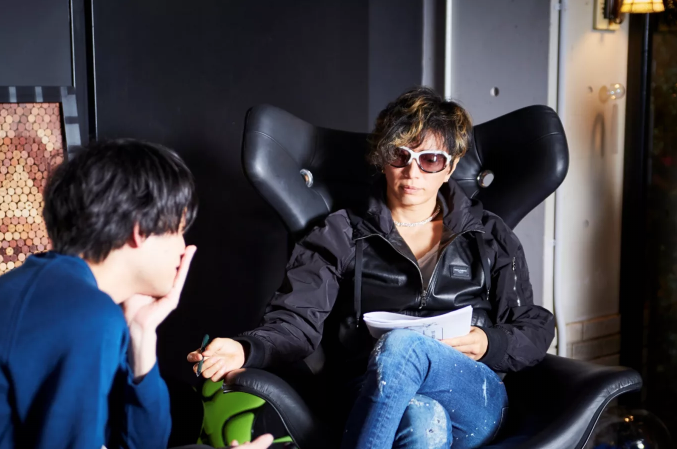
G: There are quite a lot of people who say that those who talk about money are things like “a person driven by greed”, or “a bad person trying to take from the weak”, and things like that but… That’s not the case.
To live in Japan, ‘money’ is an element that must be part of your shape of happiness.
To ignore this fact in this era of modern capitalism is extremely childish.
S: But, when we talk about musicians, don’t the artists who say, “I want to make good music rather than earn money” sound cooler?
G: Nope, if they don’t have money, they can neither play lives nor record.
If they want to continue delivering music to their fans, they can’t ignore money.
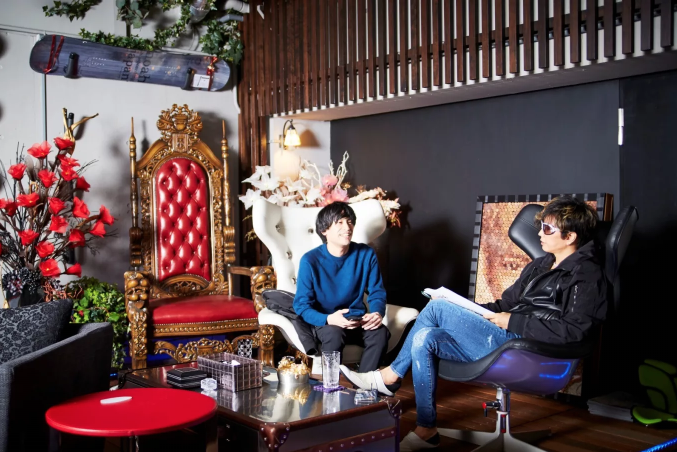
G: In the past, it’s alright for us to simply leave the difficult things to the recording companies and on our end, we’ll just devote ourselves to making music.
However, now, there’s no such thing as “I’ll be safe as long as I’m signed with a recording company”. You have to survive by thinking with you own head.
That’s why, for me, all there is to my branching out into business is for the sake of continuing to deliver music.
S: I guess the fact that we have to think about ‘money’ on our own makes us the same as business people.
It used to be an era where your status is guaranteed through lifetime employment but now, if you don’t think for ourselves we’d be in trouble…
G: I wouldn’t say that you’ll become happy as long as you have money.
But those who say that “happiness has nothing to do with money” don’t come across to me as people who are ‘serious’ about life.
Those who are committed to themselves and the people who are precious to them won’t be able to be disdainful of money.
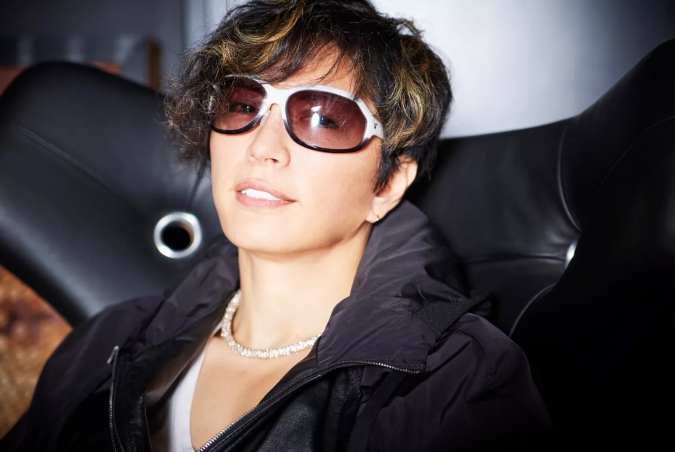
S: GACKT-san, thank you so much for this precious dialogue today…!
Somehow, I really feel like a switch has been flipped!
G: No, no, no, no matter what I say, the only one who can flip the switch for you is yourself.
No one can push you forward. And I’m sure that even the readers of today’s article will definitely feel something and read it on their own volition.
Life is made up of these “moments of inventiveness/imagination/creativity” piling up together. Even the question of what this present moment of your meeting me through this article will turn into is completely dependent on you.
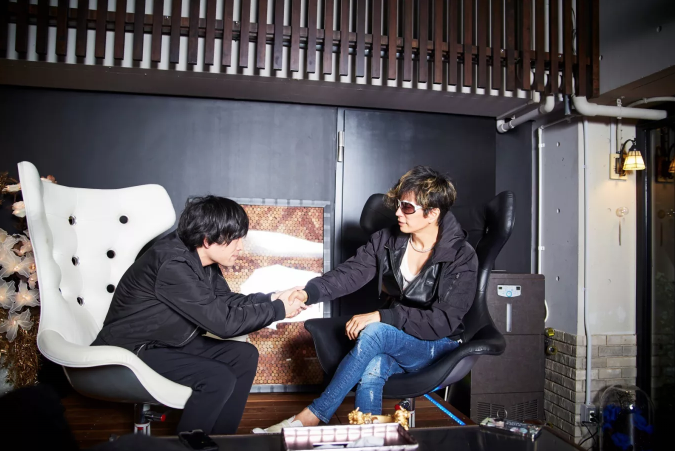
With yet another firm handshake, the interview concludes. Thank you!
We often ask, “What is happiness?” But it truly is characteristic of him to turn “the shape of happiness” into a principle and verbalise it as such…
First of all, I, too, shall try and form my own polygon of happiness. Then, I’ll work backwards and decide on what needs to be done at this present point in time.
GACKT-san was a wonderful gentlemen who interacted with me very frankly and as if I were his equal.
But for such a heated conversation to unfold before me in this space that is simply too out of this world, the weariness in me as a result of my nerves is no joke…!
〈Interview/text by: Sano Tomoki (@mlby_sns) / Editing by: Amano Shunkichi (@amanop) / Photography by: Ikeda Hiromi〉
Source: r25.jp
Translation: GACKT ITALIA Team
Translation © GACKT ITALIA
[:it]
"La felicità è qualcosa che deve essere considerato in termini di"area ".
Non avrei mai pensato che sarebbe arrivato il giorno in cui avrei dovuto intervistare GACKT-san. Devo aver accumulato alcune grandi virtù nella mia vita passata per questo. Vita passata, hai i miei ringraziamenti.
"GACKT の 勝 ち 方 (Il modo di vincere di GACKT / GACKT no Kachikata)", il libro che è uscito questo agosto e, in 2 mesi, ha venduto oltre 100.000 copie. Era un volume eccezionalmente ricco che riguardava la "Filosofia della crescita" di GACKT-san e "Il modo per fare soldi", ma alla fine c'erano queste parole profonde ...
"Ci sono molti che hanno" raggiunto il successo (成功 / seikou) ", ma pochi hanno" raggiunto la felicità (成 幸 / seikou) ". C'è una grande differenza qui. "
Cantante, cantautore e attore maschio nato nella prefettura di Okinawa nel 1973. Attualmente residente a Kuala Lumpur, Malesia. Primo vincitore giapponese del "Best Asian Rock Artist", è anche attivo come uomo d'affari nelle attività immobiliari che si rivolgono ai ricchi, ai ristoranti e ad altri.
GACKT-san, che ha avuto così tanto successo, sta dicendo: "La felicità e il successo sono due cose diverse". Bene, quindi cos'è la "felicità" per GACKT-san ...? Sono fin troppo curioso di scoprire la risposta a questo.
Detto questo, questa volta, ci stiamo intromettendo nello studio privato di GACKT-san (che cos'è uno studio privato?) Per parlargli direttamente di "soldi e successo" ...!
〈Intervistatore: Sano Tomoki〉
Dove diavolo è questo ... È questo paradiso ...?
GACKT-san dice: "Il percorso non è diviso tra" successo "e" fallimento "."
Sano (S): Ga ... GACKT-san, grazie per avermi qui oggi! (Sta sull'attenti)
GACKT-san (G): razie per essere venuto. Non stare lì in piedi. Beh, siediti
L... la sua stretta di mano è ... La sua franchezza e forza di presa possono essere descritte solo come "inaspettate"
S: Oggi, volevo parlarti di "soldi e successo".
Ho letto nel libro di GACKT-san che hai successo in numerosi affari che includono settori come quello immobiliare, quello alimentare e delle bevande. Con parole come "Per sostenere il mio stile di vita, ho bisogno di 200 milioni di yen all'anno" ...
Come fai ad essere così' capace di riuscire praticamente in qualsiasi cosa?
G: Hmm ... Per quanto riguarda quella domanda, quelle sono le parole di qualcuno che pensa, “Quando prendo qualcosa, ci sono due percorsi; "successo" o "fallimento"."
Che cosa. C'è qualcosa di diverso da quello ...?
G: In primo luogo, personalmente non penso che sia diviso in due percorsi di "successo" e "fallimento".
"Fallimento", "Fallimento", "Fallimento", "Fallimento" ... "Successo".
Le cose non si ramificano in "successo" o "fallimento".Il percorso continua semplicemente fino a quando non ci riesci. È così che la penso.
S: In altre parole, significa che anche GACKT-san ha fallito anche negli affari?
G: A tale proposito. Ci sono così tante (occasioni) che le parole non possono descriverlo (lol).
In quei momenti, mi inchinavo più volte alle persone di successo e ascoltavo quello che avevano da dire.
S: Ga-GACKT-san si inchinava alle persone e chiedeva loro un consiglio !?
G: L'ho fatto molte volte. In qualche modo conoscerei le persone che hanno fatto cosa buone negli affari e ne parlano senza fine "Come assicurarsi che le cose vadano bene"…
Coloro che colgono le opportunità non sono i "compagni straordinari", ma i "compagni adorabili"
G: Quando ero giovane, non avevo mai pensato che "Quella persona è impegnata, quindi mi trattengo dal contattarla da solo".
È un grosso errore pensare in questo modo.
S: Cosaaa ー ...? Ma se in realtà sono considerato fastidioso, mi sentirei anche dispiaciuto ...
G: La cosa strana di questo è mentre qualcuno mi sta contattando e mi chiede: "Sei libero questa settimana? Sei libero il mese prossimo? ",ci sarà un momento in cui "Questa persona è ostinata" si trasforma in "Questa persona è adorabile".
Ci sono molti ragazzini intorno a me, ma quando si tratta di ragazzini che continuano a trasmettermi il loro entusiasmo, indipendentemente da quante volte vengono rifiutati, finisco per dire: "Ho capito, ho capito. Che dire di questo particolare giorno allora? ”.
S: Quindi, non è come qualcuno che dice: "Voglio parlarne con te, quindi per favore, incontrami", e poi decidere di provare a incontrarli perché sei incuriosito dal contenuto di quella conversazione?
G: No, no, non è un motivo così complesso (lol).
Perché avrei solo la sensazione di "Questa persona è interessante" o "Forse c'è qualcosa che posso lasciare a loro", e così via dopo che ho effettivamente incontrato la persona. In primo luogo, come persona impegnata, Non mi aspetto niente dai ragazzini.
S: (Ahi) ...
Ho avuto la sensazione che "(tu) non incontrerai l'altra parte a meno che non ci sia qualcosa da guadagnare dall'incontrarli o se non hanno già ottenuto risultati nella vita".
G: No. Queste persone ottengono più risultati perché sono "compagni adorabili" e, successivamente, si trasformano in "compagni straordinari".
Coloro che colgono le opportunità non sono i "compagni straordinari", ma i "compagni adorabili"
Pensare che GACKT-san abbia finito per parlare dell'importanza di "essere adorabili" ...
G: Il lamento che "non ci sono anziani generosi che sono disposti ad aiutare" è una sciocchezza. Le tue azioni sono ciò che crea gli "anziani generosi che sono disposti ad aiutare".
Quanti sforzi hai fatto per ottenere questa "amabilità"? Non è fondamentale per far accadere le cose?
Aumentare inutilmente le opzioni porta allo spreco di tempo
S: È onestamente inaspettato sapere che hai chiesto un consiglio. Perché sembrava che tu fossi qualcuno che ha sfondato e superato tutto con le tue capacità.
G: No, e questo perché la vita ha una data di scadenza.
È molto più veloce imparare da qualcuno che ce l'ha fatta piuttosto che pensare alle cose da soli.
Coloro che hanno un senso di urgenza riguardo alle proprie date di scadenza non potranno mai scegliere l'opzione di forgiare ostinatamente da soli.
G: Ma sai, questo senso di crisi imminente verso il "tempo" varia da persona a persona.
Anche se dici: "Non ho tempo!", Non sarai in grado di trasmetterlo a persone che non ce la fanno e, da quello che posso vedere, tutti usano il tempo in estremamente dispendiosi modi. Molte persone trascorrono troppo tempo con deviazioni ...
Devo provare a disegnarlo in un diagramma?
S: Eh !?
G: Ad esempio, se entri in una "buona scuola media", le tue opzioni di "buone scuole superiori" aumentano così. Allo stesso modo, le scelte per un "buon college" entrando in un "buon liceo", e andando in un "buon college", avrai ancora più scelte di "buone compagnie".
La comune scuola di pensiero in Giappone è "Per favore, entra in una buona scuola perché ciò accada".
In altre parole, tutti pensano che "avere molte scelte" sia una buona cosa.
Qui abbiamo il diagramma disegnato a mano di GACKT-san. In fondo è "sé (自)", riferito a se stessi. Da lì, è collegato a numerose opzioni sotto forma di scuola media, scuola superiore, college e aziende.
S: Questo è... giusto
Uh, è sbagliato?
G: Guardare questo a colpo d'occhio sembrerà corretto ma ... In realtà,avrai solo sempre più opzioni di cui preoccuparti e in più di rimandare la tua decisione.
Ah, ora capisco ... Questa è un'altra pugnalata nel cuore ...
S: Anche se è vero, questo stato di "Ho provato ad aumentare le mie opzioni, ma alla fine, proverò tutto perché non riesco a decidere quale sia "l'unico ", le persone probabilmente affrontano molto le loro pietre miliari nella vita ... Come quando si cerca lavoro e così via.
G: Tuttinon vedo l'ora che arrivi la "prossima cosa" pensando "Se faccio del mio meglio ora, forse porterà a qualcosa".
Di conseguenza, l'unica cosa che si gonfia costantemente è la quantità di tempo che passi preoccupandoti delle tue innumerevoli scelte mentre fai deviazioni non correlate alla tua "felicità".
S: L'abbondanza di scelte fallisce ...
Quindi, come ha deciso GACKT-san su quale strada prendere?
G: Per me, Inizio a pianificare dal mio obiettivo.
Da lì, traccio una "linea retta di valutazione inversa" verso la mia posizione attuale.
“Risultato → Z → Y → X → → → A → Sé” sono collegati da una linea retta.
G: Per raggiungere l'obiettivo, è necessario il risultato di "Z". Per ottenere "Z", ho bisogno di "Y". Per ottenere "Y", ho bisogno di "X". E così via ... Lavorando all'indietro in questo modo, saprai cosa devi fare in questo momento, che è "A".
Tutto quello che devi fare ora è eseguirlo.
Le persone che hanno un obiettivo prefissato non si preoccupano delle scelte perché seguiranno solo una linea retta. Questo cambia completamente la quantità di tempo che possono usare nella loro vita rispetto a quelli che continuano ad aumentare le loro opzioni.
S: Vedo…
Ma penso che "decidere su un obiettivo" stesso sia davvero difficile. Ad esempio, non ho fiducia in questo obiettivo che ho elaborato, quindi, in ogni caso, aumenterò le mie opzioni e cose del genere ...
G: Non importa in particolare se cambi obiettivo mentre sei in movimento. Qualunque cosa sia, la cosa più importante è "decidere e definire un obiettivo che appartiene al presente te".
Se lo fai, il tuo "valore del tempo" cambierà drasticamente rispetto al semplice fare qualsiasi cosa ti venga presentata ora.
G: C'è chi dice che "la cultura è vita", ma la vita è semplicemente "matematica".
Per le persone che vogliono fare tesoro del "tempo", è meglio se iniziano a decidere un obiettivo proprio ora e disegnano le cose per ricavare una formula per raggiungerlo.
S: Tuttavia, è vero che fino a quando è in genere umano preoccuparsi indefinitamente delle cose fino a quando non ti sarai risolto in qualcosa ...
Ciò che ritieni essere la tua felicità deve essere considerato in termini di "area"
S: Un'altra cosa che volevo chiederti è riguardo alle parole "il successo non è uguale alla felicità" che hai scritto.
Questo viene da GACKT-san che dice:"Per sostenere il mio stile di vita, ho bisogno di 200 milioni di yen all'anno", o-onestamente, non si somma ...
Allora, cos'è la felicità ...?
G: Tutti si aspettano che "Una volta che avrò successo in qualcosa, diventerò felice", ma non è vero.
Anch'io incontro molte persone di cui si può dire che siano felici, ma ... Se dovessi chiedere loro se sono "felici", allora, non lo sono per niente.
G: In primo luogo, per quanto riguarda la tua domanda "Cos'è la felicità?", Non esiste una risposta a questo.
La felicità è qualcosa che deve essere considerato in termini di "area".
S: Area?
G:Diciamo, ad esempio, che la "felicità" per me consiste "Soldi", "amici" e "tempo". È deciso dall'area del "triangolo" che si formano questi tre elementi.
G: 1. Per avere "soldi" che mi permettono di fare tutto ciò che voglio fare.
2. Avere "amici" che combatteranno al mio fianco per ottenere quei "soldi".
3. Avere "tempo" che posso condividere con "amici".
Quando questi tre formano un perfetto triangolo equilatero, quello, per me, è lo stato di "felicità".
Inoltre, c'è la domanda su quanto grande possa essere quest'area ... Tutto qui.
S: Il modo di GACKT-san di raggiungere la felicità è semplicissimo da capire ...
G: Molte persone non sanno quale sia la loro "forma di felicità". Ecco perché si sentono a disagio quando vedono altre persone che sembrano felici.
Devi essere consapevole di come appare la tua "felicità" e di quali elementi è composta.
S: È vero ... A proposito, c'è qualche motivo particolare per cui deve essere un triangolo con "lati uguali"?
G: Personalmente, credo che “la legge del raggiungimento della felicità (成 幸 の 法則)” sia quella di espandere la tua forma di felicità il più possibile mantenendo l'equilibrio come un “poligono regolare”.
G: Ad esempio, quando sei uno studente, hai "amici" e "tempo", giusto? Ma poiché ti manca molto il "denaro", questo si trasforma in un triangolo molto piccolo e distorto.
A quel punto, lavorerai disperatamente per ottenere "soldi", ma all'improvviso ti renderai conto di aver perso di vista tutto tranne guadagnare "soldi" e aver finito per sacrificare "amici" e "tempo". Ci sono molte persone che sono così.
Inseguono solo una cosa e finiscono per trascurare tutto il resto. Non è giusto. Devi pensare a un modo per raggiungere l'equilibrio tra tutto.
S: Questo colpisce davvero ...
Anche se pensiamo che stiamo inseguendo la felicità, ci stiamo dirigendo costantemente verso l'infelicità. Questo è sicuramente il modo in cui vanno gli ingranaggi ...
G: Sia che la forma della tua felicità sia un pentagono o un esagono ... Credo che ognuno abbia la propria forma e che spetti a loro decidere liberamente per se stessi.
Tuttavia,mantieni il "poligono regolare" il più possibile e fai crescere quella "area" mantenendo questo equilibrio. Questo è qualcosa che spero tutti terranno a mente.
G: In questo mondo, ci sono molti che gridano "la legge del raggiungimento del successo", ma non pensi che dobbiamo pensare di essere felici più che di avere successo… È così che mi sono sempre sentito.
Non credo che coloro che affermano che la "felicità non abbia nulla a che fare con i soldi" siano "seri" sulla vita
S: Se dovessi disegnare la mia forma, penso che ci metterei sicuramente "soldi", ma ...
Ho la sensazione che sia difficile parlare di soldi in Giappone.
G: Sì, è un dato di fatto.
G: Ci sono un sacco di persone che affermano che quelli che parlano di soldi sono cose come "una persona guidata dall'avidità", o "una persona cattiva che cerca di prendere dai deboli", e cose del genere ma ... Non è così.
Per vivere in Giappone, il "denaro" è un elemento che deve far parte della tua forma di felicità.
Ignorare questo fatto in questa era del capitalismo moderno è estremamente infantile.
S: Ma, quando parliamo di musicisti, gli artisti che dicono "Voglio fare buona musica piuttosto che guadagnare soldi" sembrano più interessanti?
G: No, se non hanno soldi, non possono né suonare né registrare.
Se vogliono continuare a offrire musica ai loro fan, non possono ignorare i soldi.
G: In passato, va bene per noi semplicemente lasciare le cose difficili alle case discografiche e dalla nostra parte, ci dedicheremo semplicemente a fare musica.
Tuttavia, ora non esiste una cosa come "Sarò al sicuro fintanto che sarò firmato con una casa discografica". Devi sopravvivere pensando con la tua testa.
Questo è il motivo per cui, per me, tutto ciò che c'è da fare per diramare in affari è per il gusto di continuare a fornire musica.
S: Suppongo che il fatto che dobbiamo pensare ai "soldi" da soli ci renda gli stessi degli uomini d'affari.
E' un'era in cui il tuo status è garantito attraverso l'occupazione a vita, ma ora, se non pensiamo a noi stessi, saremmo nei guai ...
G: Non direi che sarai felice finché avrai soldi.
Ma quelli che affermano che "la felicità non ha nulla a che fare con i soldi" non mi vengono in mente come persone "serie" sulla vita.
Coloro che si impegnano con se stessi e le persone che sono preziose per loro non potranno essere sdegnosi di denaro.
S: GACKT-san, grazie mille per questo prezioso dialogo oggi ...!
In qualche modo, mi sento davvero come se fosse stato azionato un interruttore!
G: No, no, no, non importa quello che dico, l'unico che può premere l'interruttore per te è te stesso.
Nessuno può spingerti in avanti. E sono sicuro che anche i lettori dell'articolo di oggi sentiranno sicuramente qualcosa e lo leggeranno di propria volontà.
La vita è composta da questi "momenti di inventiva / immaginazione / creatività" che si accumulano insieme. Anche la domanda su in cosa si trasformerà in questo momento presente del mio incontro con questo articolo dipende completamente da te.
Con l'ennesima stretta di mano ferma, l'intervista si conclude. Grazie!
Spesso chiediamo: "Che cos'è la felicità?" Ma è veramente caratteristico da parte sua trasformare "la forma della felicità" in un principio e verbalizzarlo come tale ...
Prima di tutto, anch'io cercherò di formare il mio poligono di felicità. Quindi, lavorerò e deciderò cosa deve essere fatto in questo momento.
GACKT-san è stato un meraviglioso gentiluomo che ha interagito con me molto francamente e come se fossi suo pari.
Ma perché una conversazione così accesa che si svolge davanti a me in questo spazio che è semplicemente troppo fuori da questo mondo, la stanchezza in me a causa dei miei nervi non è uno scherzo ...!
〈Intervista / testo di: Sano Tomoki (@mlby_sns) / Montaggio di: Amano Shunkichi (@amanop) / Fotografia di: Ikeda Hiromi〉
Source: r25.jp
Translation: GACKT ITALIA Team
Translation © GACKT ITALIA
[:]
[:en][PHOTOS] TOMOMITSU SENOO TWITTER - NOV 21 2019[:it][FOTO] TOMOMITSU SENOO TWITTER - NOV 21 2019[:]
[:en]Tomomitsu Senoo Twitter update. New photo with GACKT, translation below:
In the official practice we are at 3rd place.
Uh, GACKT-san came to support our team.😊
Thank you for talking a lot and taking pictures as well!
2 shots will be posted on Instagram!
There will be more than 70 races, but I want to get a good result because he came to support us!
Now the night session begins!
公式練習は3位
あのGACKTさんが僕らのチームの為に応援に来てくれました😊
沢山お話して写真も撮って頂いてありがとうござます!
2ショットはインスタに載せて下さるみたい!
70台以上のレースになりますが決勝も応援に来て下さるので良い結果出したいです!今からナイトセッションです! pic.twitter.com/unv9Ic4THO
— 妹尾智充 Tomomitsu Senoo (@tomomitsu_senoo) November 21, 2019
Translation: GACKT ITALIA Team
Translation © GACKT ITALIA
[:it]Tomomitsu Senoo Twitter update. Nuova foto con GACKT, traduzione a seguire:
Nella pratica ufficiale siamo al 3 ° posto.
GACKT-san è venuto a sostenere il nostro team
Grazie per aver parlato molto e aver fatto anche foto!
2 scatti saranno pubblicati su Instagram!
Ci saranno più di 70 gare, ma voglio ottenere un buon risultato perché è venuto a sostenerci!
Ora inizia la sessione notturna!
公式練習は3位
あのGACKTさんが僕らのチームの為に応援に来てくれました😊
沢山お話して写真も撮って頂いてありがとうござます!
2ショットはインスタに載せて下さるみたい!
70台以上のレースになりますが決勝も応援に来て下さるので良い結果出したいです!今からナイトセッションです! pic.twitter.com/unv9Ic4THO
— 妹尾智充 Tomomitsu Senoo (@tomomitsu_senoo) November 21, 2019
Traduzione: GACKT ITALIA Team
Traduzione © GACKT ITALIA
[:]

[:en][PHOTO] USHIKOI INSTAGRAM - NOV 17 2019[:it][FOTO] USHIKOI INSTAGRAM - NOV 17 2019[:]
[:en]Ushikoi Instagram update. New photos with GACKT, translation below
Oh my goodness!
GACKT-san who is a world-renowned superstar not limited in Japan boundaries has appeared at Ushikoi!
Did Koinosuke see a phantom? The lantern of the happiness which became a Christmas specialty with GACKT-san's collaboration is really magical...
Translation: GACKT ITALIA Team
Translation © GACKT ITALIA
[:it]Ushikoi Instagram update. Nuova foto con GACKT, traduzione a seguire
Oh mio Dio!
GACKT-san, che è una superstar di fama mondiale non limitata ai confini del Giappone, è apparso a Ushikoi!
Koinosuke ha visto un fantasma? La lanterna della felicità che è diventata una specialità natalizia con la collaborazione di GACKT-san è davvero magica...
Traduzione: GACKT ITALIA Team
Traduzione © GACKT ITALIA
[:]


[:en][PHOTO] TAKESHI NAKANO INSTAGRAM - OCT 20 2019[:it][FOTO] TAKESHI NAKANO INSTAGRAM - OTT 20 2019[:]
[:en]Takeshi Nakano Instagram update. New photo of GACKT, translation below
Went to attend Camui Gakuen de Tobina-Sai.
The student council president is doing well this year too!
Translation: GACKT ITALIA Team
Translation © GACKT ITALIA
[:it]Takeshi Nakano Instagram update. Nuova foto con GACKT, traduzione a seguire
Ho partecipato al Camui Gakuen de Tobina-Sai.
Anche il presidente del consiglio studentesco sta andando bene quest'anno!
Traduzione: GACKT ITALIA Team
Traduzione © GACKT ITALIA
[:]